Tuesday, August 13, 2024

Felipe Pinglo Alva


Felipe Pinglo Alva 


Source: Wikipedia, the free encyclopaedia

Information fom article Felipe Pinglo y la cancion criolla


Felipe Pinglo Alva (July 18, 1899 - May 13, 1936), known as the father of Peruvian Musica criolla and nicknamed the "Immortal Bard" or ("Bardo Inmortal" in Spanish),[1] was an influential and prolific poet and songwriter best known for his often covered "El Plebeyo" (The Commoner). In Peru and Latin America, Pinglo's name is most often associated with the Peruvian vals criollo, which is a uniquely Peruvian music, characterized by the 3/4 time, elaborate guitar work and lyrics about lost love or the Lima of yesteryear.


Biography


Pinglo with other composers 

Felipe Pinglo Alva was born in one of the oldest sections of Lima, (Barrios Altos), known as an historical district with a working class population, to a schoolteacher and his wife on July 18, 1899. Felipe's mother died when he was still a child. The poverty in which young Felipe was raised as well as the instruction received by his father and aunts created a young mind that was both learned and socially conscious. During his lifetime, Pinglo was known as a Bohemian, sickly and frail, and walking with a slight limp. A naturally talented musician, Pinglo earned money as a youth by replaying songs he had heard the local military bands playing by ear in the central plaza. As a child, he studied the works of Rubén Darío, Leonidas Yerovi Douat, Gustavo Adolfo Bécquer and Amado Nervo.[1] In 1917, he produced his first vals, "Amelia" at the age of 18, which instantly became a popular and respected song. He was buried at Presbítero Maestro. For the next 19 years until his death in 1936 he composed approximately 300 songs, many of them lost forever or surviving in fragments only. In 1939, the broadcasting of "El Plebeyo" was banned by Óscar R. Benavides but Benavides claimed it was actually Víctor Raúl Haya de la Torre.[1] In 1957 Rafael Del Carpio interviewed nearly 60 persons who personally knew Pinglo, in an attempt to document his life. The recordings of these interviews were stored in a radio station and over time, deteriorated before any analysis or transcription was done.

A man of his time


Felipe Federico Pinglo Alva was born on July 18, 1899, in the thirteenth block of Jirón Junín (formerly Prado), in Barrios Altos, in the

center of Lima. He was the son of María Florinda Alva,

who died as a result of complications during childbirth, and the educator Felipe

Pinglo Meneses, who had an important influence on his life, particularly in his approach to literature. Although Felipe Pinglo

did his primary studies in a public school and attended secondary school at the Colegio Nacional Nuestra Señora

de Guadalupe, he did not have an academic background in music, being in fact self-taught, who

began to write poetry and then provided it with music, innovating the Creole songbook with his own style. He

worked at a very young age in a printing press, then in a gas company, and was also a public servant. He was left-handed - that's why he played the guitar with the neck and headstock on the right -, a football fan, a bohemian, and was married from a young age to Hermelinda Rivera, with whom he had two children: Felipe and Carmen.

The music of the Peruvian coast, often called "creole music," brings together various genres,


among which the waltz, marinera, polka and Afro-Peruvian rhythms stand out. All of them arose in the


popular sectors and have gone through a process of fusion, which has shaped them as


part of the identity of the nation. A great exponent, whose work marks a before and after in


the evolutionary process of the waltz and its subsequent consolidation, is Felipe Pinglo Alva, a character


whose prolific musical work as a composer touches the most intimate fibers of that feeling of


belonging to a space like the city of Lima.

The social aspect of his work


Pinglo's musical work can be organized into three


broad groups: the first is characterized by songs


with an idyllic, romantic language and very influenced by


modernism, among which we can mention Celos,


Claro de luna, Horas de amor, Aldeana, Emilia, Oh mujer,


Ramito de flores, Sueños de opio. The second group addresses


the problems of his time: the lyrics do not lose their


poetic sense, but become the means to transmit messages loaded with denunciation and social criticism; he


does not only want to attract attention, but to empathize with those marginal characters. Finally, a third group


covers themes that reflect other interests of the author such as


football and its great idols, or the influence of American


culture on city lifestyles.

the second group, the "social" one.


This is the core of Pinglo's work, reflected in songs such as El plebeyo, Mendicidad,


La obrerita, Jacobo el maderador, which question the status


quo and denote that the composer, although he composes lyrics,


not only provides them with the music that he likes, but


El plebeyo. Converted into a sort of Creole hymn,


there are many versions about who inspired this composition


which, specifically, narrates the drama of Luis Enrique, in love with a woman from a different and exalted social class, which is precisely why it is difficult to access,


given the old and well-known social conventions. The


waltz ends with a phrase that is a question and a complaint:


Lord, why are beings / not of equal value!?... That is, what


is happening in this world that not all human beings have the same value, although it would be love that could


break those barriers. And glimpsing the strictly formal nature of that composition and his work in general, it is "the sensitive


narrative correspondence between music and lyrics"4


that is creating an atmosphere that envelops us in that drama of


Love and denunciation.


The Musica Criolla movement was influential throughout Latin America throughout the 20th century,[2][3] producing many romantic standards that are covered by artists of every generation and nationality. Pinglo's songs have been sung by such notable artists as:


Los Panchos

Los Embajadores Criollos

Los Chalanes del Perú

Julio Jaramillo

Vicente Fernández

Soledad Bravo

Mercedes Sosa

Los Morochucos

Los Troveros Criollos

Pedro Infante

Caetano Veloso

Plácido Domingo

Eva Ayllon

Olimpo Cárdenas

Julio Iglesias

Some of Pinglo's Songs

El Plebeyo - The Plebeian

El huerto de mi amada - The orchard of my beloved

El espejo de mi vida - The mirror of my life

suenos de Opio - Opium Dreams

Jacobo el Leñador - Jacob the Lumberjack

Oracion del Labriego - Worker's Prayer

Pasion y Odio - Passion and Hate

Social beliefs

Pinglo's affinity for the poorer classes led to much speculation and innuendo throughout the various political eras of Peru. At certain times, such as during the dictatorship of Óscar R. Benavides, El Plebeyo and other songs written by Pinglo, were banned from radio airplay. It was widely circulated that Pinglo was an Aprista, or that he was politically allied with José Carlos Mariátegui. However, being a Bohemian, it is also likely that he was an Anarcho-syndicalist.


Contemporary writings indicate that Pinglo participated in cultural events organized by syndicalists of the era, such as the homage to sculptor Delfín Lévano in a theatre in the La Victoria neighborhood in Lima.


At different times, governments attempted to slander Pinglo by alleging he was an alcoholic, or addicted to morphine. Contemporary reports indicate that he was a moderate drinker who did not use drugs.

In 1935, Pinglo fell ill with severe pain in his left knee due to a sports injury and also due to increasingly acute spasms caused by poorly cured bronchitis.


Three days before he died, Pinglo finished writing what would be his last song, the waltz "Hermelinda" dedicated to his wife. He no longer had the strength to put it to music so he asked his wife to give it to Paco Vilela or Pedro Espinel to be put to music. Hermelinda Rivera did not want to make this last composition known and because she had kept it hidden for so many years, it is not very well known.


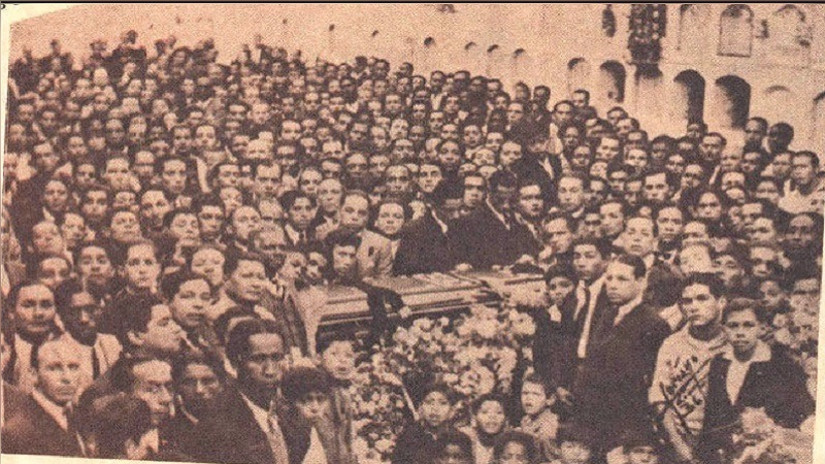
At 5 in the morning on May 13, 1936, at the age of 36, Felipe Pinglo Alva died with his eyes fixed on the image of the Virgin of Carmen, patron saint of criollismo. The next day, his remains were accompanied by nearly a thousand people to the Santa Rebeca barracks of the Presbítero Maestro Cemetery where he was buried. Four days later, the composer Pedro Espinel, one of Pinglo's best friends, founded the "Felipe Pinglo Alva Music Center."


On October 26, 1958, his remains were transferred to a mausoleum crowned by a bust by the sculptor Artemio Ocaña. The attic of the tomb, in the form of musical notes, was designed and forged by the decimist Nicomedes Santa Cruz. These attic are the first notes of the waltz "El plebeyo."

With affection,


Ruben


Saturday, August 10, 2024

Franz Liszt

Franz Liszt


By Jesse Preis

Explore the genius of Franz Liszt, including his most popular music

Franz Liszt was a Hungarian composer, pianist, conductor, and teacher who was popular during the Romantic period. His pianistic virtuosity, showmanship, and physical attractiveness made him so well-known that his fans started a movement that is now known as “Lisztomania.” He might be considered the world’s first rock star, with popularity similar to the modern-day Taylor Swift, The Beatles during the 60s and 70s, or Elvis Presley during the 50s and 60s. If you grew up watching cartoons such as Looney Tunes and Tom and Jerry, then you will already be familiar with Liszt’s music. Read on to learn more!


Franz Liszt: Biography


Born: October 22, 1811, Doborján, kingdom of Hungary, Austrian Empire [now Raiding, Austria]

Died: July 31, 1886, Bayreuth, Germany (aged 74)

Liszt was born into a musical family on October 22nd, 1811 in Doborján, Hungary (which is known today as Raiding, Austria). His first piano teacher was his father Adám, who began teaching him at the age of seven. At age nine, Franz began performing in concerts around the cities of modern-day Hungary, Austria, and Slovakia. Around this time, he also began taking piano lessons from Carl Czerny, who was a student of Ludwig van Beethoven.


At the age of 21, Liszt had the opportunity to see Italian violin virtuoso Niccolo Paganini perform in concert. Following this concert, he became determined to become a piano virtuoso of the same caliber as Paganini. Luckily, he was living in Paris, France, which at this time in history was known as the pianist capital of the world. His growing friendships with virtuoso pianists and composers such as Frederic Chopin, Sigismond Thalberg, and Alexander Dreyschock helped build his technical knowledge of the instrument.


Franz Liszt: Music & Most Famous Works


Liszt is not just well-known for his brilliant compositions, but for his arrangements and transcriptions of other composers’ works as well. Here are some examples of his most famous arrangements and original works.


Probably best known is his Hungarian Rhapsody no. 2, which comes from a set of 19 Hungarian-themed rhapsodies. This piece has been referenced in many cartoons, including Looney Tunes (performed by Bugs Bunny) and Tom and Jerry (performed by Tom the Cat).

An example of his most romantic would be his Liebestraum no. 3 in A-flat Major. “Liebestraum” translates from German as the “Dream of Love”, which you can clearly hear in the tone that he creates if you listen here.

In his Grandes études de Paganini, Franz Liszt composed six etudes based on melodies written for the violin by Niccolò Paganini. These pieces are argued to be some of the most difficult pieces in the piano repertoire. The most famous is the Étude no. 3 in G# Minor, “La campanella”, which makes use of fast octave jumps, scales, arpeggios, and so much more. Watch and listen to this piece here!

Perfect for October (his birth month), Liszt’s Totentanz for Piano and Orchestra is based on the creepy Gregorian chant “Dies Irae” (“Day of Wrath”) and is frightening enough to keep you up on Halloween night!

Another Halloween classic is French composer Camille Saint-Säens’ La danse macabre, which Liszt transcribed and arranged for piano. Check out this piece here!

Liszt also transcribed and arranged Beethoven’s 7th symphony for piano. You can hear that by clicking here.

Relationship with Frederic Chopin

Liszt maintained friendships with several important composers, including Robert Schumann, Hector Berlioz, and Frederic Chopin (about whom you can learn more here). Liszt and Chopin are known as two of the greatest pianist-composers of the 19th century. They became acquainted when Chopin made his Paris debut in 1832. Liszt was in the audience and had the following to say:


“The most vigorous applause seemed not to suffice our enthusiasm in the presence of this talented musician, who revealed a new phase of poetic sentiment combined with such happy innovation in the form of his art.”


Although Chopin and Liszt became friends, their friendship was strained at times. There is an account that he performed a piece of Chopin’s, but with Liszt embellishing and adding to it. Chopin felt insulted and told Liszt that if he didn’t plan on performing it as written, he should not perform the piece at all. Liszt apologized, but whether that fixed the strained relationship is unknown.


Interesting Facts About Franz Liszt

Have you ever wondered why pianists often perform without sheet music and so many other instrumentalists such as violinists perform with sheet music? Thank Liszt! Before Liszt’s time, it was uncommon for pianists to perform without sheet music in front of them. In fact, pianists such as Chopin considered it an insult to the composer to play without sheet music. Liszt was a showman and enjoyed wowing his audience with his technical brilliance and his ability to play from memory. His personal performance technique influenced other pianists and the rest is history!

Although Franz Liszt was Hungarian, his first language was German and he didn’t learn his ancestral language until later in life. Despite this fact, he was known to be intensely proud of his Hungarian heritage.

Impressionism, the French compositional-style that is famously tied to composers like Claude Debussy and Maurice Ravel, is rumored to have been inspired by the use of whole tone scales and extended chords in his Années de pèlerinage.


With affection,

Ruben


Tuesday, August 6, 2024

José Sabogal

José Sabogal


Source: Wikipedia


Personal information


Birth name José Arnaldo Sabogal Diéguez

Born March 19, 1888

Cajabamba, Peru

Died December 15, 1956 (age 68)

Lima, Peru

Burial Cemetery Presbítero Matías Maestro

Nationality Peruvian

Family

Parents Manuela Diéguez de Florencia

Matías Sabogal

Spouse María Wiesse Romero

Children José, Rosa Teresa

Professional information

Occupation Painter, essayist, professor


José Arnaldo Sabogal Diéguez (Cajabamba, March 19, 1888 - Lima, December 15, 1956) was a Peruvian painter, professor and essayist. He was one of the first promoters and one of the leaders of the Peruvian indigenist 

 Biography


José Sabogal was born in the city of Cajabamba (Cajamarca) (Peru) on March 19, 1888 in a mestizo family, being the son of Matías Sabogal del Castillo and Manuela Diéguez de Florencia. In 1922 he married the writer María Wiesse Romero (1894-1964), daughter of the historian Carlos Wiesse Portocarrero. The marriage had two children: José Rodolfo Sabogal Wiesse (1923-1983) and Rosa Teresa Sabogal Wiesse (1925-1985).


The origin of the surname Sabogal is the Castilian word sabogal, which indicates a net to fish sabogas and which is mentioned in chapter XXIX of the second part of the old editions of Don Quixote de la Mancha. According to María Wiesse's book José Sabogal, the artist and the man, the painter's ancestors are believed to have come from a fishing village called Saboga in northern Spain.


José Sabogal traveled through Spain, southern France, Italy, and North Africa between 1908 and 1913 before beginning to study at the National School of Fine Arts in Buenos Aires (Argentina), where he studied for five years.23


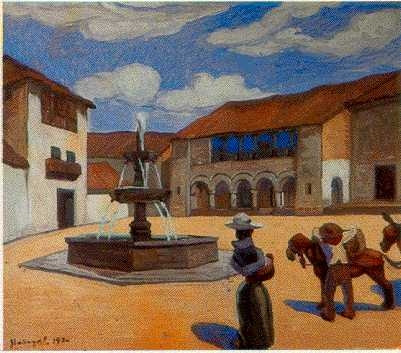
Sabogal dedicated himself to promoting pre-Columbian culture and aesthetics.2 During a six-month stay in Cuzco, Sabogal became interested in depicting the city and its inhabitants in his paintings.3 In 1919, he held an exhibition of his paintings at the Casa Brandes in Lima, which attracted the attention of critics and the public.3


For José Carlos Mariátegui, Sabogal is the Peruvian painter par excellence. The reason is that Sabogal was the painter who broke with European academic colonialism and created his own national school with authentic Peruvian roots without being a copy of the dominant European art. Sabogal resurrected the artistic value, the roots and the dignity of the Peruvian in a unique, native, vernacular and original way. Sabogal decided to promote Peruvian art internationally after a visit to Mexico, where he met Diego Rivera, José Clemente Orozco and David Alfaro Siqueiros.3


From 1920, Sabogal taught at the Escuela Nacional Superior Autónoma de Bellas Artes del Perú3 and between 1932 and 1943 he served as director of this institution.3


 He was artistic director of the magazine Amauta, whose first issue, published in 1926, bears a drawing of his authorship on the cover. Sabogal and Luis Eduardo Valcárcel later founded the Instituto Libre de Arte Peruano (Free Institute of Peruvian Art) at the National Museum of Peruvian Culture.3 His work is part of the permanent collection of the Museum of Contemporary Art in Cusco.


His disciples include Camilo Blas, Enrique Camino Brent, Julia Codesido, Cota Carvallo, Jorge Segura, Aquiles Ralli, Gamaniel Palomino, Pedro Azabache Bustamante, Andrés Zevallos and Eladio Ruiz.

Art Works


With affection,

Ruben


Saturday, August 3, 2024

Camilo Blas


Camilo Blas


Personal information


Birth name José Alfonso Sánchez Urteaga


Born March 19, 1910

Birth March 19, 1910   

Flag of Peru Cajamarca, Peru


Peruvian Nationality


Family


Children Elena, Hilda, Berta and Gabriela


Education


Education National University of Trujillo, National School of Fine Arts


Educated at


National University of Trujillo

National Autonomous Superior School of Fine Arts of Peru

Professional information


Area Painting, Engraving


Indigenismo Movement

Professional information


Area Painting, Engraving


Indigenismo Movement


Pseudonym Camilo Blas


Member of Grupo Norte


Distinctions Culture Award in 1946


José Alfonso Sánchez Urteaga,1​ known as Camilo Blas (Cajamarca, March 19, 1903 - Lima, July 26, 1985), was a Peruvian indigenist painter.


Biography


Camilo Blas had Ana María Siles as his wife and his daughters are Elena, Hilda, Berta and Gabriela. Since childhood he showed his artistic spirit through drawings and sketches. Thanks to the support of his uncle, the Cajamarca artist Mario Urteaga, he took his first steps in painting.


He entered the National University of Trujillo to study Law, a career that he completed. He did his art studies at the National School of Fine Arts in Lima under the direction of Daniel Hernández and later with José Sabogal. His classmates included Ricardo Flórez, Camino Brent and Julia Codesido. From 1933, he was a professor of fine arts for many years and then Director of the School of Fine Arts in Lima.


With a refined style, within the indigenist current, he knew how to add a touch of subtlety and color of his own to his drawings.


Due to the large number of Peruvian costumbrist drawings that his works present, both from Cajamarca and from all of Peru, he is also considered the "Pancho Fierro serrano".


Pseudonym Camilo Blas


Member of Grupo Norte


Distinctions Culture Award in 1946


José Alfonso Sánchez Urteaga,1​ known as Camilo Blas (Cajamarca, March 19, 1903 - Lima, July 26, 1985), was a Peruvian indigenist painter.


Camilo Blas had Ana María Siles as his wife and his daughters are Elena, Hilda, Berta and Gabriela. Since childhood he showed his artistic spirit through drawings and sketches. Thanks to the support of his uncle, the Cajamarca artist Mario Urteaga, he took his first steps in painting.


He entered the National University of Trujillo to study Law, a career that he completed. He did his art studies at the National School of Fine Arts in Lima under the direction of Daniel Hernández and later with José Sabogal. His classmates included Ricardo Flórez, Camino Brent and Julia Codesido. From 1933, he was a professor of fine arts for many years and then Director of the School of Fine Arts in Lima.


With a refined style, within the indigenist current, he knew how to add a touch of subtlety and color of his own to his drawings.


Due to the large number of Peruvian costumbrist drawings that his works present, both from Cajamarca and from all of Peru, he is also considered the "Pancho Fierro serrano".


Art works   


 Andes Peru Landscape


Trujillo colonial house


Down to Paunamarco    


Sierra Peru landscape

Marinera Dance

Andes party


Procession Señor de los milagros

With affection,
Ruben