Wednesday, March 8, 2023

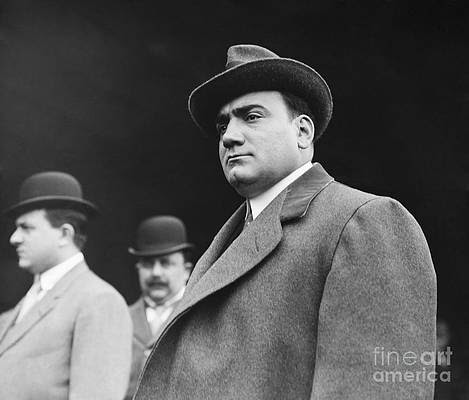
Enrico Caruso


Enrico Caruso


19 years old

Italian opera singer

Source: Encyclopaedia Britannica


Enrico_Caruso_as_the_Duke_in_Rigoletto

Enrico Caruso, original name Errico Caruso, (born February 25, 1873, Naples, Italy—died August 2, 1921, Naples), the most admired Italian operatic tenor of the early 20th century and one of the first musicians to document his voice on recordings.


Caruso was born into a poor family. Although he was a musical child who sang Neapolitan folk songs everywhere and joined his parish choir at the age of nine, he received no formal music training until his study with Guglielmo Vergine at age 18. Within three years, in 1894, he made his operatic debut, in Mario Morelli’s L’amico Francesco in Naples at the Teatro Nuovo. Four years later, after adding a number of impressive roles to his repertoire, he was asked to create the role of Loris in the premiere of Umberto Giordano’s Fedora in Milan. He was a sensation and soon had engagements in Moscow, St. Petersburg, and Buenos Aires. He made his La Scala debut with La Bohème (1900). In 1901, after being unfavourably received in his performance in L’elisir d’amore in Naples, he vowed never again to sing in Naples, and he kept his word.


USA 2006 - 78th Annual Academy Awards. Closeup of giant Oscar statue at the entrance of the Kodak Theatre in Los Angeles, California. Hompepage blog 2009, arts and entertainment, film movie hollywood

Caruso then created the chief tenor parts in Adriana Lecouvreur, Germania, and La fanciulla del West, and for the La Scala company the tenor roles in Le maschere and L’elisir d’amore. World recognition came in the spring of 1902 after he sang in La Bohème at Monte Carlo and in Rigoletto at London’s Covent Garden. He made his American debut in Rigoletto at the opening night of the Metropolitan Opera in New York City on November 23, 1903, and continued to open each season there for the next 17 years, presenting 36 roles in all. His last public appearance—his 607th performance with the Metropolitan Opera—was as Eléazar in La Juive (December 24, 1920).


Caruso became the most celebrated and highest paid of his contemporaries worldwide. He made recordings of about 200 operatic excerpts and songs; many of them are still being published. His voice was sensuous, lyrical, and vigorous in dramatic outbursts and became progressively darker in timbre in his later years. Its appealing tenor qualities were unusually rich in lower registers and abounded in warmth, vitality, and smoothness.


The Editors of Encyclopaedia Britannica

This article was most recently revised and updated by Amy Tikkanen.

With affection’

Ruben

Thursday, March 2, 2023

Just Fontaine

 Just Fontaine

Record World Cup goalscorer dies aged 89

The France striker scored a record 13 goals in the 1958 World 


Just Fontaine

Just Fontaine: Record World Cup goalscorer dies aged 89

The France striker scored a record 13 goals in the 1958 World Cup in Sweden

Source: Independent Newspaper London England

Jamie Braidwood

Images Google


Just Fontaine at the 1958 World Cup in Sweden, where he scored a record 13 goals in six games.

Just Fontaine at the 1958 World Cup in Sweden, where he scored a record 13 goals in six games


Legendary France striker Just Fontaine, who holds the record for the most goals scored at a single men’s World Cup, has died aged 89.


Fontaine struck a record 13 goals in just six games at the 1958 tournament in Sweden, where France reached the semi-finals.


Fontaine was a last-minute call-up to the French squad and was largely unheard of outside his country before going on to set the record.


No player has come close to breaking Fontaine’s record since. The late Germany forward Gerd Muller scored 10 goals at the 1970 World Cup but that was the last time a player hit double figures at the tournament. In 2006, Fontaine told The Associated Press that he did not think his record would ever be beaten.


"Beating my record? I don’t think it can ever be done," he said. "The person who wants to beat me has a massive task, doesn’t he? He has to score two goals per game over seven games."

Fontaine scored 30 goals in 21 international appearances for France between 1953 and 1960 but his career was cut short at the age of 28 due to a broken leg.

At club level, Fontaine scored 259 goals in 283 matches for French club Stade de Reims, who announced his death on Wednesday.

Fontaine led Reims to the 1959 European Cup final against Real Madrid and the team said: “A star of French football, an outstanding goalscorer, a Reims legend.”

In 1958, France were knocked out of the World Cup by Brazil and the 17-year-old Pele in the semi-finals, but Fontaine went on to score four goals in the third-place game against West Germany.

Germany striker Miroslav Klose holds the record for the most goals scored in a World Cup career with 16 goals scored across four tournaments.


With affection,

Ruben


Tuesday, February 28, 2023

Kiss me a lot lyrics Consuelo Velazquez


Kiss me a lot lyrics


consuelo velazquez

Kiss Me Kiss Me a Lot

like it was tonight

The last time

Kiss Me Kiss Me a Lot

that I'm afraid of losing you

lose you later


I want you very close

look me in your eyes

see you next to me

Think that maybe tomorrow

I will be far away

Far away from you


Kiss Me Kiss Me a Lot

like it was tonight

The last time

Kiss Me Kiss Me a Lot

that I'm afraid of losing you

lose you later

I want you very close

look me in your eyes

see you next to me

Think that maybe tomorrow

I will be far away

Far away from you


Kiss Me Kiss Me a Lot

like it was tonight

The last time

Kiss Me Kiss Me a Lot

that I'm afraid of losing you

lose you later


that I'm afraid of losing you

lose you later

Composer: Consuelo Velazquez


With

Affection,

Ruben


Consuelo Velázquez 'Besame mucho'


Consuelo Velázquez


Consuelo Velázquez Torres (August 21, 1916 in Ciudad Guzmán, Jalisco – January 22, 2005,[1] Mexico City), also popularly known as Consuelito Velázquez,[2] was a Mexican concert pianist and composer. She was the composer of famous Mexican ballads such as "Bésame mucho", "Amar y vivir", and "Cachito".[1]


Beginning Years

Originally from Ciudad Guzmán, Mexico,[3] she was the youngest of five daughters born to the soldier and poet Isaac Velázquez de Valle and his wife, María de Jesús Torres Ortíz.[1][citation needed] At four years old she started to demonstrate a good ear and an aptitude for music, and at barely six years old she began studying music and piano at the Académia de Música Serratos in Guadalajara. After several years of study, when she was eleven, she moved to Mexico City, where she continued her studies and obtained a degree in teaching music and concert piano at the National Conservatory of Music.[4] Her first public concert was held in the Palacio de Bellas Artes in the capital, and soon after she began as a composer of popular music.[4] As a concert pianist, she was a soloist of Mexico's National Symphony Orchestra and of the Philharmonic Orchestra of the National Autonomous University of Mexico.


As performing on the radio for a young woman of a wealthy family was risky, she used a male pseudonym in her first years.[1] Mariano Rivera Conde, who was the artistic director of the station, pushed her to admit she was the author of the songs. Velázquez married him six years later.[1]


Composer

As a composer her legacy has been more well known. Her first compositions, "No me pidas nunca", "Pasional" and "Déjame quererte", were from the genre "naturaleza romántica", which emphasizes nature's beauty and strength.[2] Later, songs like "Bésame mucho", "Amar y vivir", "Verdad Amarga", "Franqueza", "Chiqui", "Cachito", "Que seas feliz", "Enamorada", "Orgullosa y bonita" and "Yo no fui" (a danceable song initially popularized by Pedro Infante and, in recent years, by Pedro Fernández) emerged among others. Velázquez's work as an actress in the 1938 Argentinian movie Noches de Carnaval[5] directed by filmmaker Julio Saraceni was unique for her career. As a pianist she was also involved in the Mexican movies directed by Julián Soler Se le pasó la mano[6]​ made in 1952 and Mis padres se divorcian[7] made in 1959. Additionally, she appeared in the documentary about her life, Consuelo Velázquez,[8] made in 1992. Throughout her life she composed music for several Mexican movies.


Besame mucho


With Pedro Vargas  1950

Her most well-known success is the iconic song "Bésame mucho", composed in the cuban music genre bolero, when she was only 16 years old. This is the piece that gained Velázquez the most recognition and brought the most pleasure to her. The song was created before Consuelo received her first kiss from someone she loves.[9] After being recorded by the Spanish-Mexican baritone Emilio Tuero,[1] in 1944 the famous American pianist and singer Nat "King" Cole made the first adaptation of the song in English. From then on, it was interpreted and performed by hundreds of artists around the world, such as Pedro Infante, Javier Solís, The Beatles, Plácido Domingo, Frank Sinatra, Sammy Davis Jr., Luis Mariano (who popularized it France), Dalida, Sonora Santanera, Xavier Cugat and his Orchestra, The Ventures, Antonio Machín, Lucho Gatica, Vera Lynn, Andrea Bocelli, Filippa Giordano, Luis Miguel, Sara Montiel, José Carreras, Ray Conniff and his Orchestra, Diana Krall, Zoé, Susana Zabaleta and Mónica Naranjo among others.[10] "Bésame mucho" is also known as "Kiss Me Kiss Me Much", "Kiss Me a Lot", "Kiss Me Again and Again", "Embrasse-Moi" and "Stále ma bozkávaj". Translated into more than 20 languages, the song has become an icon of popular music. Part of its great success in the United States was the contextualization of the song towards women who waited for their husbands during World War II.


Personal life


Years after the beginning of her career, Velázquez married the media owner and artist promoter Mariano Rivera Conde (died in 1977), and they had two sons, Mariano and Sergio Rivera Velázquez. In the period between 1979 and 1982 she was a part of the Chamber of Deputies of the Congress of the Union, which was her only contribution in politics of her country. She was winner of the National Prize for Science and Arts in the field of Popular Art and Traditions in 1989.[11]


Affected by cardiovascular sickness, Consuelo Velázquez died on January 22, 2005. Her body was moved to the Palacio de Bellas Artes, the stage of her first show, in tribute to the known artists of the town. Her ashes later were buried in the Santo Tomas Moro church, where she went every Sunday for mass. As her last artistic contribution, she performed piano in the most recent album of the Mexican singer Cecilia Toussaint titled Para mi... Consuelo, which contains songs by Velázquez.


In 1977 the concert pianist also received the Award of Peace of the United Nations, together with her colleague the teacher Ramon Inclan Aguilar and the journalist and singer Wilbert Alonzo Cabrera, Lola Beltrán and Maria Medina. This award was presented to them by the General Clerk of the ONU due to this artistic participation and organization of a lavish Mexican festival for the "día del personal" of the United Nations, a day that celebrates the contributions of people in uniform and civilians to the work of the organization.[12]


Recently, it has been discovered that the composer left seven unedited songs in her last wishes, among them "Donde siempre" (dedicated to Cecilia Toussaint), "Mi bello Mazatlán" (that the Banda El Recodo will record) and "Por el camino", that Velázquez left to the Mexican singer Luis Miguel.


With affection,

Ruben

Sunday, February 26, 2023

Lyrics tango 'Cambalache"


Lyrics Tango Cambalache


Enrique Santos Discepolo


That the world was and will be crap, I already know


In 506 and in 2000 too


That there have always been jets, Machiavellian and scammers


Happy and bitter, values and doubles


But that the twentieth century is a display


Of insolent evil, there is no one to deny it


We live wallowed in a meringue


And in the same mud all groped


Today it turns out that it is the same to be straight as a traitor


Ignorant, wise, jet, generous, swindler


Everything is the same, nothing is better


The same a donkey as a great teacher


There are no postponements, nor rank


The immoral have equalized us


If one lives in the imposture


And another steals in his ambition


It doesn't matter if it's a cure


Mattress, king of clubs


cheeky or stowaway


what a lack of respect


What a violation of reason


anyone is a sir


anyone is a thief


Mixed with Stavisky


Van Don Bosco and the Mignon


Carnera and Napoleon


Don Chicho and San Martin


Just like in the disrespectful window


of the exchanges


Life has been mixed


And wounded by a saber without rivets


You see the Bible cry against a water heater


Twentieth century, exchange, problematic and feverish


The one who doesn't cry, doesn't suck, and the one who doesn't worry is a gil


Give it no more, give it go


That there in the oven we are going to find


Don't think anymore, sit aside


That nobody cares if you were born honest


What is the same as the one who works


Night and day like an ox


That the one who lives from the others


That the one who kills or the one who heals


Or is he outlaw


We live wallow in a meringue

And in the same mud all groped


Written by: Enrique Santos Discépolo.

With affection,


Ruben